Recipe
Servings
2–3 1×
Serves 2–3Prep 10 minCook 15 min
Ingredients
- Raw shrimp, peeled and deveined
- Butter or olive oil
- Garlic
- Fresh spinach
- Sun-dried tomatoes or a small amount of cherry tomato
- Heavy cream
- Finely grated Parmesan
- Italian seasoning
- Salt, black pepper, and optional red pepper flakes
Method
- Pat the shrimp dry and season lightly.
- Sear them in a hot skillet until pink and opaque, then transfer them to a plate.
- Cook the garlic and tomatoes in the same pan to lift the browned bits.
- Add spinach and let it wilt.
- Lower the heat, add cream, and simmer gently until slightly thickened.
- Stir in Parmesan, then return the shrimp to the skillet just long enough to warm through.
- Serve immediately with a low-carb side.
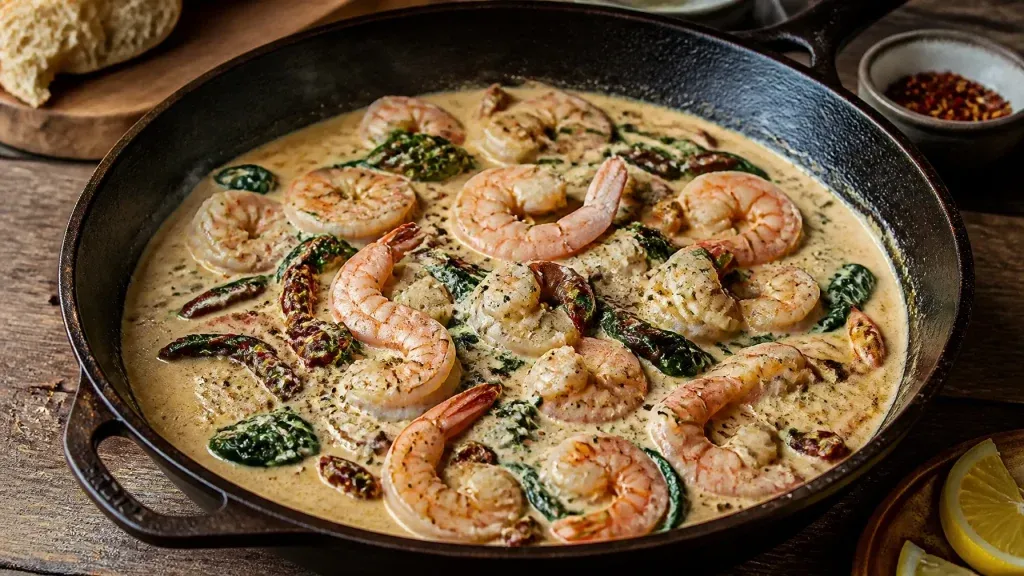
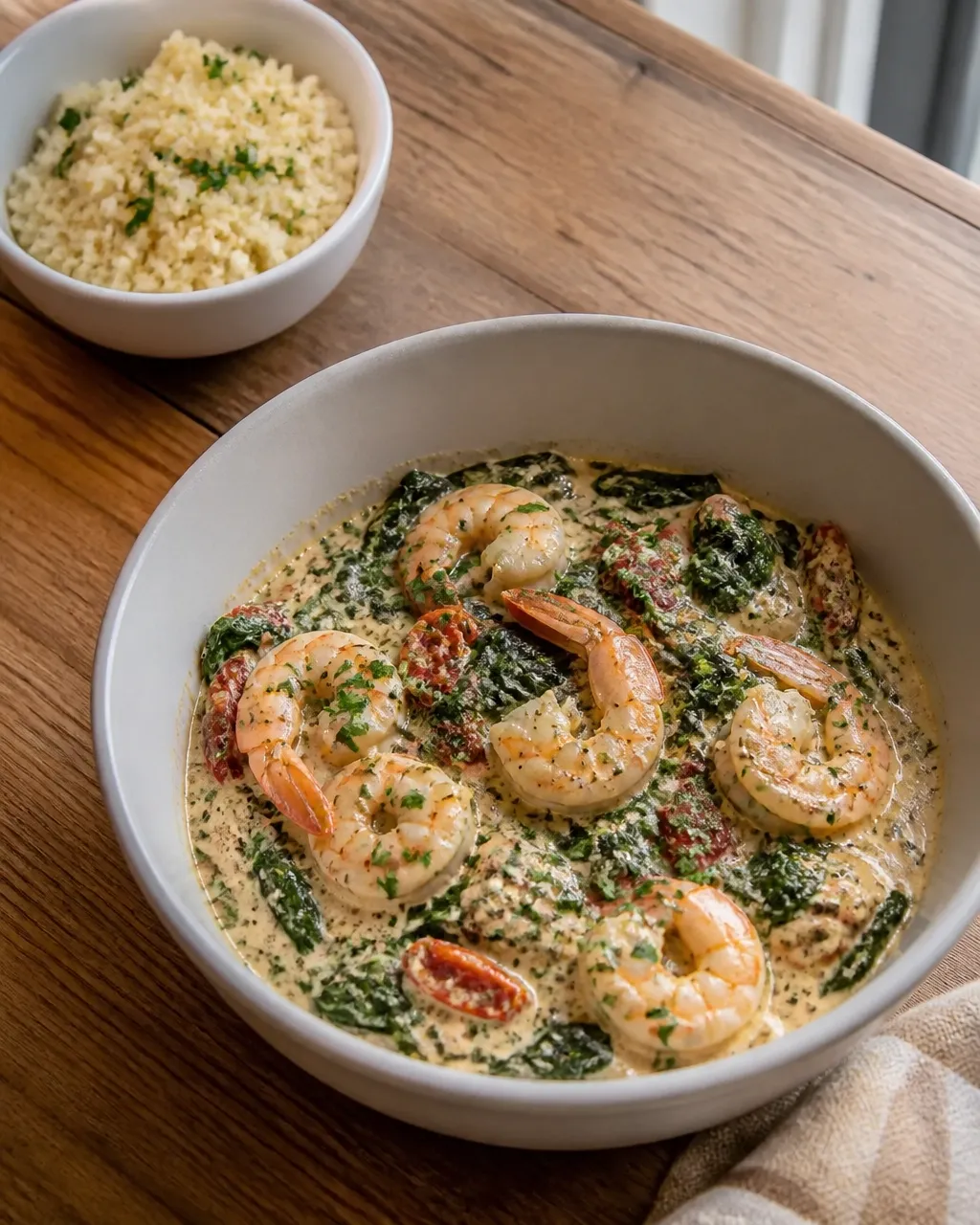
Creamy Tuscan shrimp skillet is the kind of dinner that makes keto cooking feel pleasantly uncomplicated. You get tender shrimp, garlicky cream sauce, spinach, and tangy sun-dried tomatoes in one pan, with no pasta required. It is fast enough for a weeknight, polished enough for company, and forgiving enough for a first attempt. If you are searching for quick family meals that do not taste like a compromise, keep this skillet close.
Tips & Technique: Make the Skillet Work for You
Dry shrimp create better browning
Do not skip the most boring-looking step: pat the shrimp dry. Surface moisture must evaporate before browning can begin. If the shrimp go into the pan wet, they will release water and steam instead of developing a lightly golden edge.
Use paper towels and press gently. Aim for a dry surface, not a dehydrated shrimp situation. Season just before cooking so the salt does not draw out moisture while the shrimp wait.
Use heat to build flavor, not punishment
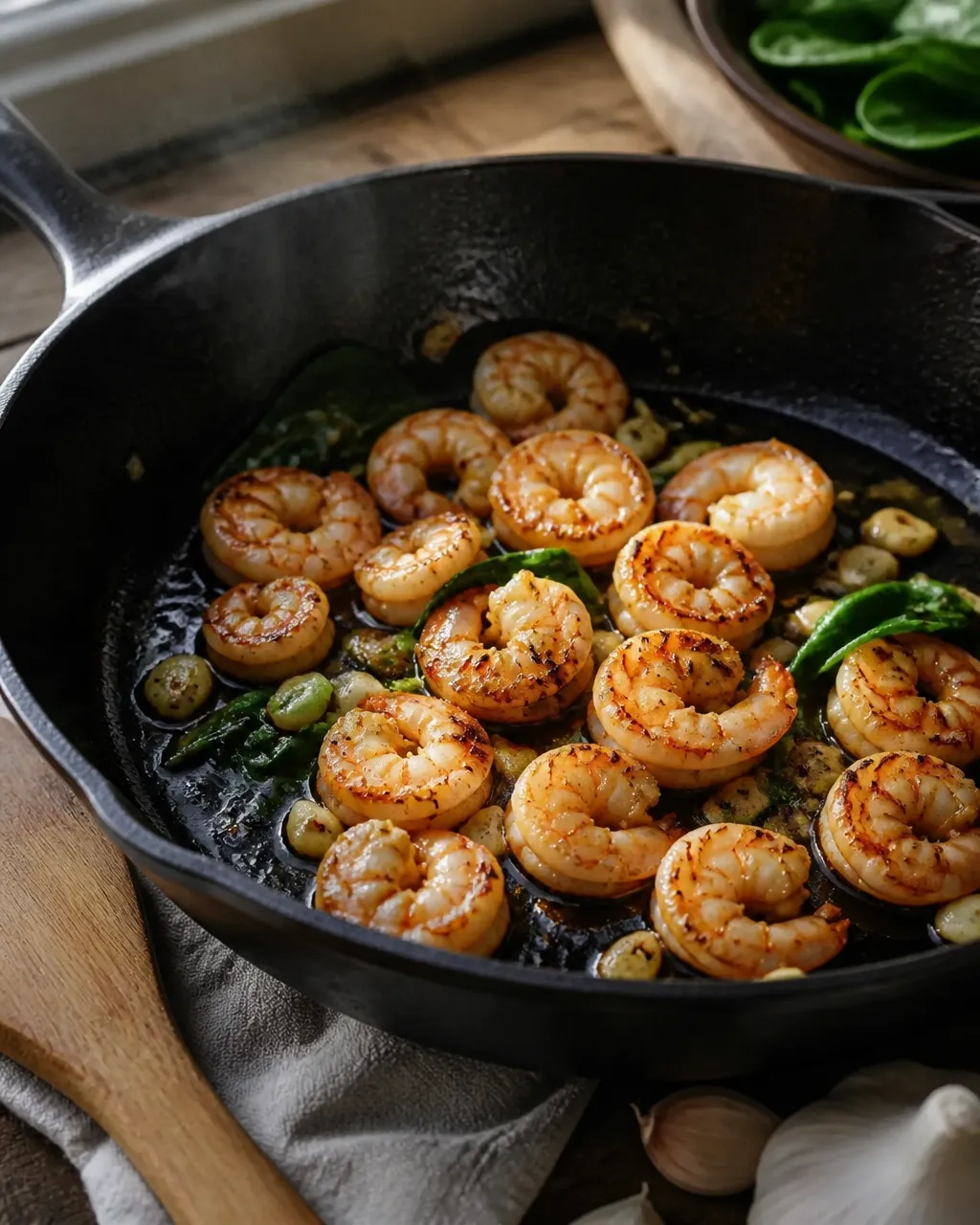
Heat the skillet over medium to medium-high heat, then add your fat. The pan should be hot enough for the shrimp to sizzle as soon as they land. Arrange them in a single layer and leave space between them. Crowding lowers the pan temperature, which again leads to steaming.
Shrimp cook quickly because they are small and mostly protein. Watch for the color to change from gray and translucent to pink and opaque. A gentle C shape is a useful visual cue. A shrimp curled into a tight O has usually stayed in the pan too long and may be rubbery.
For food safety, cook shrimp to about 145°F (63°C). A thermometer is the most reliable check; otherwise, inspect the thickest shrimp in the pan. Remove them promptly and set them aside. They will finish warming in the sauce later.
Keep the browned bits
Do not wash the skillet after cooking the shrimp. Those little caramelized patches on the bottom are concentrated flavor. Garlic, tomatoes, and cream will loosen them, creating a sauce that tastes much more developed than its short cooking time suggests.
Cook the garlic briefly. Thirty seconds is often enough to make it fragrant. Garlic contains sulfur compounds that become sweeter and more rounded with gentle cooking, but they turn bitter quickly when scorched. Stir constantly and lower the heat if the pan looks too aggressive.
Let spinach collapse before adding cream
Fresh spinach contains a surprising amount of water. Let it wilt first so that some of that moisture can cook off. Adding cream immediately can leave the sauce thinner than you want.
Spinach does not need a long cooking time. Once the leaves have collapsed and turned glossy, move on. Overcooking it can produce a dull color and a slightly metallic flavor, neither is invited to this dinner.
Simmer gently, then add cheese carefully
The cream needs enough heat to reduce slightly, but a hard boil is the enemy. Rapid boiling can cause dairy proteins to separate, leaving you with an oily sauce and tiny curds. Keep the heat at medium-low and look for slow bubbles around the edges.
Add finely grated Parmesan after the cream has warmed and thickened a little. Smaller shreds melt faster and more evenly. Stir continuously, and lower the heat further if necessary. Parmesan brings salt, umami, and body, so taste before adding more salt.
If the sauce seems too thick, loosen it with a spoonful of warm water. If it seems too thin, give it another minute of gentle simmering. Do not solve every sauce problem by turning up the heat. That is how dinner starts wearing a greasy little mustache.
Finish off the heat
Return the shrimp with any juices left on the plate. Warm everything together for about a minute, then turn off the burner. This protects the shrimp from overcooking and gives the sauce a moment to settle.
Serve the skillet right away. Cream sauces thicken as they cool, and the texture is best when the sauce is still loose enough to coat each shrimp and vegetable.
This cooking approach follows the same basic principles found in tested versions such as Diet Doctor’s creamy Tuscan shrimp: cook the seafood quickly, keep the sauce gentle, and replace traditional starches with low-carb vegetables.
Variations That Keep the Balance
Make it extra garlicky
Add another small clove of garlic, but cook it gently. More garlic should bring warmth and savoriness, not bitterness. A pinch of red pepper flakes adds heat without changing the structure of the sauce.
Use salmon or chicken
Replace the shrimp with bite-size salmon pieces for a richer skillet. Cook the salmon until nearly done before building the sauce, then return it at the end. Chicken also works, but cook it completely before starting the cream sauce because it needs more time than shrimp.
Add mushrooms
Sliced mushrooms bring earthy flavor and absorb the creamy sauce beautifully. Brown them before cooking the garlic. Mushrooms release water as they cook, so wait until their moisture has evaporated and their edges begin to color.
Brighten the finished dish
Cream, butter, and Parmesan are rich. Balance them with lemon zest or a small squeeze of lemon added just before serving. Add the lemon gradually; too much acid can make dairy sauces look slightly grainy. Fresh parsley or basil also brings a clean, herbal finish.
Keep the tomato choice keto-friendly
Sun-dried tomatoes are intense, so a small amount gives plenty of flavor. Check the label for added sugar, especially when buying tomatoes packed in a sweetened marinade. If you prefer fresh tomatoes, use a modest portion and remember that they release more water into the skillet.
Side Dish Pairings for a Complete Plate
Serve the shrimp over cauliflower rice when you want something spoonable that catches every drop of sauce. Rice the cauliflower fairly small, but do not overcook it; a little bite keeps the meal from becoming soft-on-soft.
Zucchini noodles are another good match. Keep them barely cooked so they do not release a flood of water into the cream sauce. Toss them separately with a little salt, then serve the shrimp and sauce over the top.
For contrast, pair the skillet with a lemony arugula salad. Peppery greens and acid cut through the richness, while cucumber or celery adds crunch. Steamed broccoli also works well, especially when you want a sturdy vegetable that can handle the sauce.
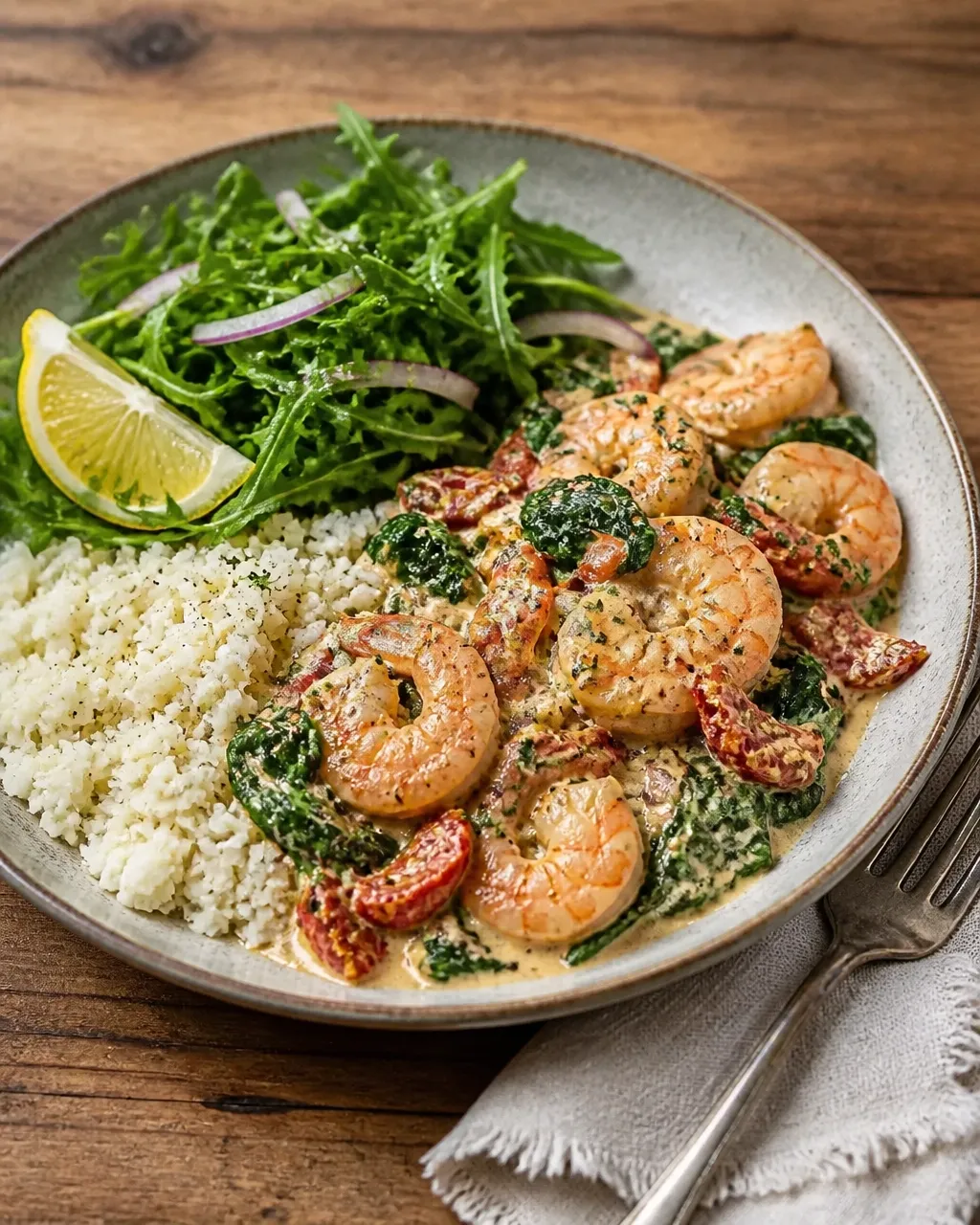
If you are collecting healthy dinner ideas, remember the basic pairing rule: match a rich main dish with something fresh, crisp, bitter, or acidic. Your plate, and your taste buds, will thank you.
FAQ: Beginner Questions About Creamy Tuscan Shrimp
Can I use frozen shrimp?
Yes. Thaw them completely before cooking, then pat them very dry. Frozen shrimp release extra water as they heat, so putting them straight into the skillet can prevent browning and dilute the sauce. Thaw overnight in the refrigerator or place the sealed shrimp in cold water until flexible. Avoid warm water, which can encourage uneven thawing.
Why did my cream sauce separate?
The pan was probably too hot, or the sauce boiled for too long. Dairy sauces are emulsions: fat and water are held together in a smooth mixture. Excessive heat can break that structure.
Lower the heat before adding the cream, simmer gently, and add Parmesan gradually. If the sauce starts looking oily, remove the skillet from the burner and whisk in a splash of warm water. It may come back together. Do not add cold liquid all at once.
What if my sauce is too thin?
First, give it a little more time over low heat. Water must evaporate for the sauce to concentrate. Stir frequently and wait a minute or two before making another adjustment.
If the shrimp are already in the pan, remove them while the sauce reduces so they do not overcook. Add them back only when the sauce coats the back of a spoon. Remember that Parmesan thickens the sauce too, so avoid adding a large amount of cheese in a panic.
What if my sauce is too thick?
Stir in warm water, a spoonful at a time. You can also use a little extra cream, but water is often enough because the sauce already contains plenty of fat and dairy solids. Add liquid slowly so you do not swing from too thick to soup.
Can I make this dairy-free?
You can, although the flavor and texture will change. Use a dairy-free cooking cream and a plant-based Parmesan-style alternative designed to melt. Coconut cream works in a pinch, but it adds a noticeable coconut flavor. Pair it with lime, chili, and cilantro rather than Italian seasoning for a more natural balance.
Can I prepare this as one of my air fryer recipes dinner options?
Use the air fryer only for the shrimp if you want a hands-off method, but make the cream sauce separately in a skillet. Air-fried shrimp will not create the browned bits needed for the sauce, and they can dry out quickly. Add the cooked shrimp to the finished sauce just before serving.
Is this recipe automatically keto?
It is designed to be low in carbohydrates, but the total depends on your portion sizes and ingredient labels. Cream, Parmesan, spinach, and shrimp generally fit a keto pattern, while tomatoes contribute small amounts of carbohydrate. Serve it with cauliflower or zucchini instead of pasta, rice, or bread, and check packaged sun-dried tomatoes for added sugar.
Keto needs vary by person, so use the nutrition information from your exact ingredients if you are tracking closely. For more adaptable weeknight inspiration, visit Cookpedia’s quick meals section.
Can I reheat leftovers?
Yes, but reheat gently. Warm the shrimp and sauce in a skillet over low heat, stirring occasionally. Add a splash of water or cream if the sauce has tightened in the refrigerator. Stop as soon as the dish is hot; prolonged reheating makes shrimp firm and causes cream sauces to split.
How do I know when the shrimp are done?
Look for pink, opaque flesh and a relaxed C curve. The center should no longer look gray or translucent. If you use a thermometer, check the thickest shrimp and aim for 145°F (63°C). When in doubt, remove the shrimp slightly early and let them finish warming in the sauce. You can always add heat; you cannot undo rubbery seafood.