Recipe
Serves
12 1×
Serves 12 squaresPrep 25 minCook 45 min
Ingredients
Method
- Heat the oven to 170°C fan or 190°C conventional. Lightly grease a 30 x 23cm rectangular tin. Line the base with the sheet of shortcrust pastry, trimming it to fit. Press it gently into the corners without stretching it.
- Spread the lemon curd in a thin, even layer over the pastry. Use the back of a spoon to guide it across the base, leaving a small gap around the edge so it does not squeeze up the sides during baking.
- Put the softened butter and caster sugar in a large mixing bowl. Beat for 2–3 minutes, until pale and creamy. Scrape down the sides of the bowl once so the mixture combines evenly.
- Add the eggs one at a time, beating briefly after each addition. If the mixture looks slightly curdled, add a spoonful of the measured flour and continue mixing. Stir in the vanilla extract and lemon zest.
- Sift the self-raising flour and baking powder into the bowl. Fold them into the mixture until no dry patches remain. Stop as soon as the batter is combined; overmixing can make the sponge firm.
- Spoon the batter carefully over the lemon curd. Spread it to the edges with a palette knife or the back of a spoon, taking care not to drag up too much curd from underneath.
- Scatter the blueberries evenly over the batter. Press them in very lightly so they sit partly in the surface, rather than disappearing beneath it.
- Bake for 45 minutes, until the top is golden and the centre springs back when pressed gently. A skewer inserted into a sponge-only area should come out without wet batter. If the top browns too quickly, loosely cover the tin with foil for the final part of baking.
- Leave the traybake in its tin until completely cool. Run a knife around the edges, lift or turn it out carefully, then cut into 12 squares with a sharp knife. Wipe the blade between cuts for tidier edges.
Lemon Curd and Blueberry Traybake
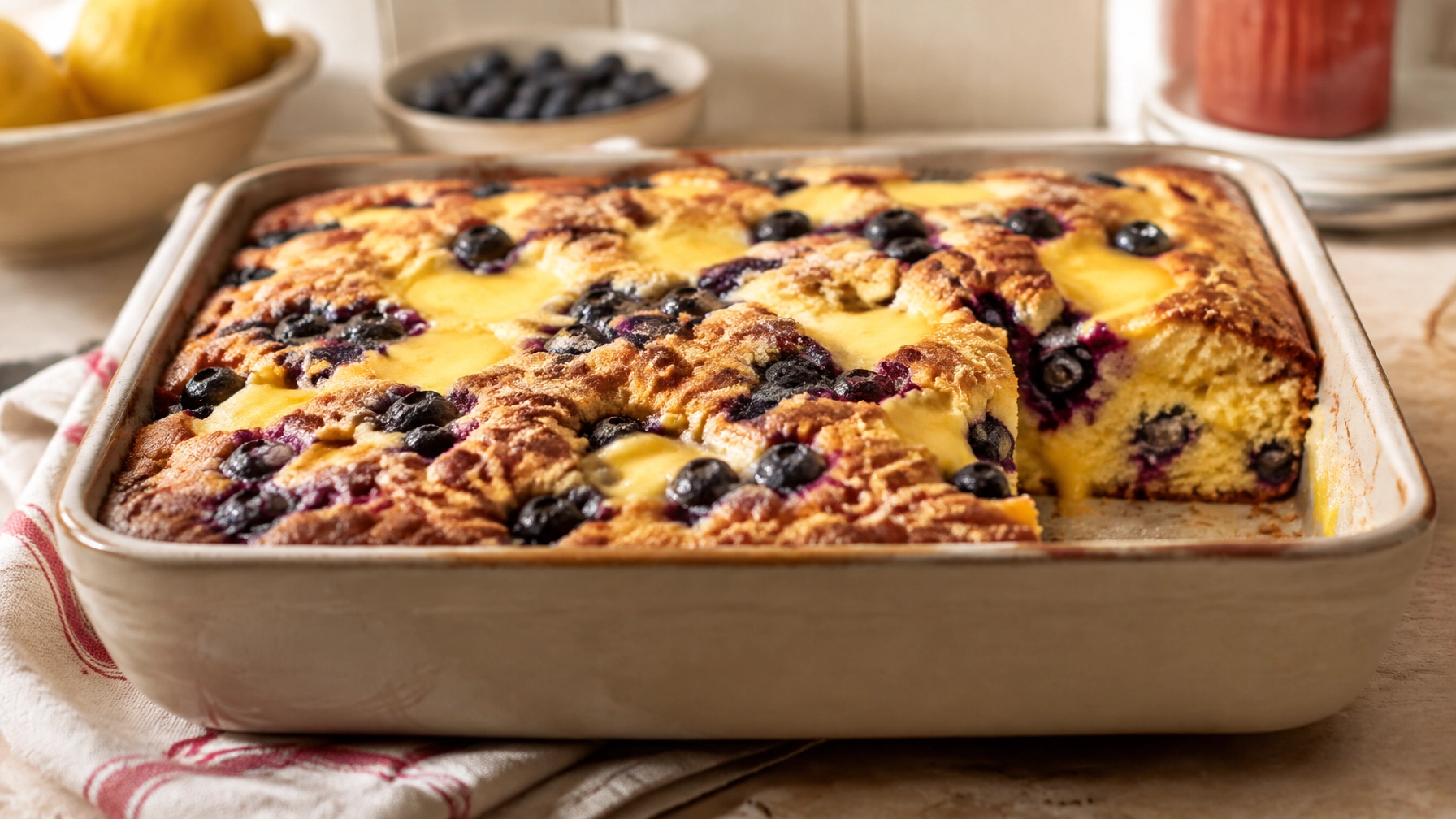
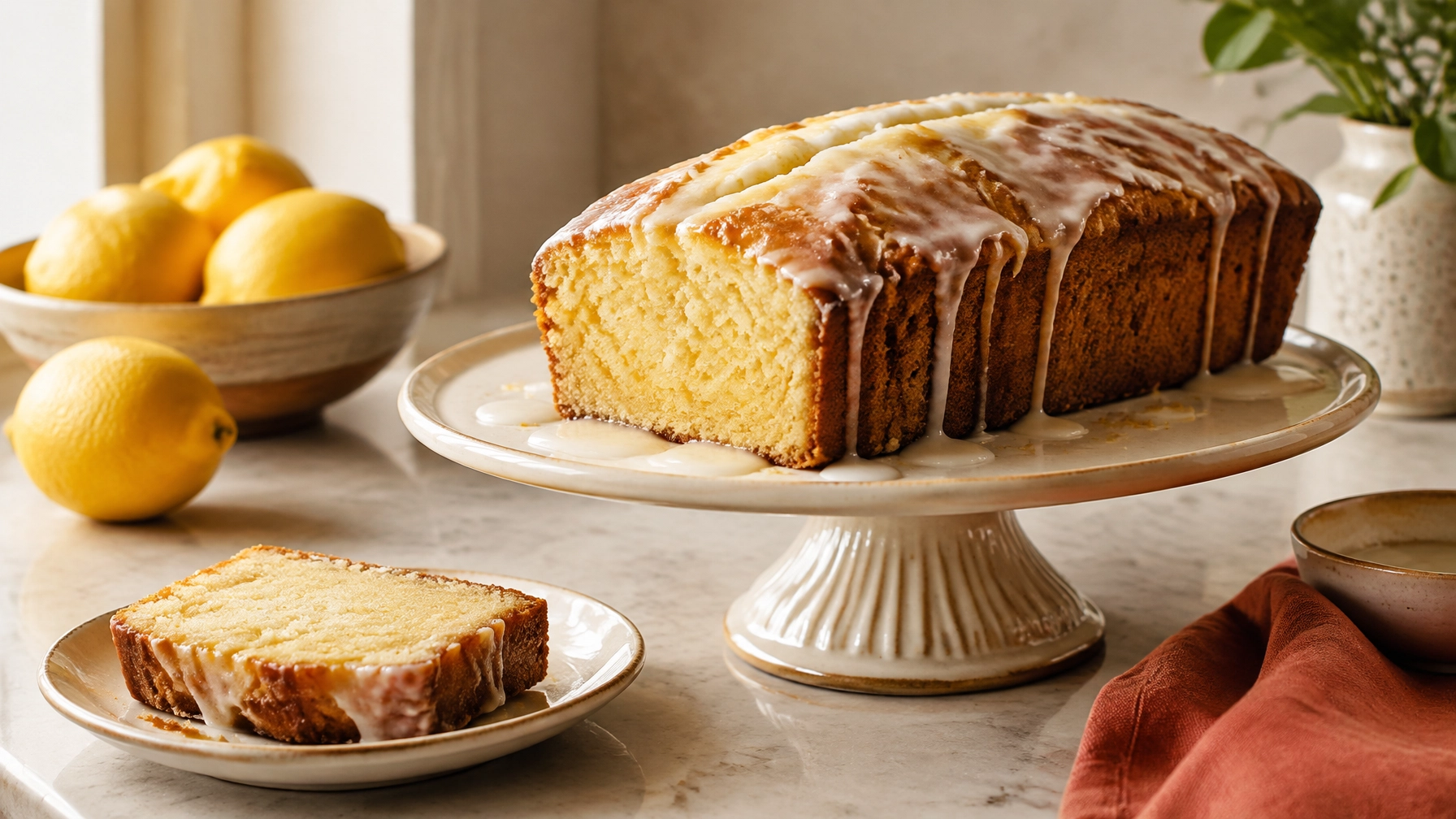
Lemon curd and blueberry traybake pairs a soft, lightly lemon-scented sponge with sweet-tart berries and a layer of buttery pastry. The lemon curd sits between the pastry and sponge, adding a bright, tangy centre to each square.
This British-style bake is made in a rectangular tin and cut into portions once cool. It works for an afternoon tea, a packed lunch or a make-ahead freezer treat.
JUMP TO RECIPE
Recipe
Servings: 12 squares
Prep time: 25 minutes
Cook time: 45 minutes
Total time: 1 hour 10 minutes
The total time covers preparation and baking, but not cooling. Allow the traybake to cool completely before slicing for neat portions.
Tips
- Check the tin size: A smaller or deeper tin can make the sponge take longer to bake. Use the centre test as well as the stated time.
- Bring ingredients to room temperature: Butter and eggs at similar temperatures combine more evenly and help create a consistent sponge.
- Spread the curd gently: A thin layer gives every portion a little lemon flavour without making the base soggy.
- Cool before cutting: The curd and sponge firm as they cool. Slicing while warm can make the layers shift and the squares crumble.
Variations
- Add more citrus: Replace the zest of one lemon with the zest of two for a more pronounced lemon flavour. Keep the juice out of the batter, as extra liquid can alter its texture.
- Use frozen blueberries: Add them straight from the freezer and scatter them over the surface. Work quickly so they do not begin to thaw in the warm kitchen.
- Finish with a simple glaze: Once the traybake is cool, mix icing sugar with a little lemon juice and drizzle it over the top. Let the glaze set before slicing.
- Make smaller portions: Cut the cooled bake into 16 squares instead of 12. This is useful for a buffet or when serving several other cakes.
FAQ
Can I make lemon curd and blueberry traybake ahead?
Yes. Bake it a day ahead, cool it fully and store it in an airtight container at room temperature. Keep it away from direct heat.
Can I freeze the traybake?
Yes. Cut the cooled bake into squares and freeze them in a sealed container with baking parchment between layers. Defrost portions at room temperature before serving.
How can I tell when the sponge is baked?
The top should be golden, and the centre should spring back when gently pressed. A skewer inserted into a sponge-only area should come out without wet batter; avoid testing directly through a blueberry or the lemon curd layer.