Recipe
Prep 20 minCook 1H10 min
Ingredients
Method
- Heat the oven to 160°C fan or 180°C conventional. Line a 2 lb loaf tin with baking paper, covering the base and long sides.
- Beat the softened butter, caster sugar and lemon zest in a large bowl for 2 to 3 minutes, until pale and fluffy. Scrape down the sides of the bowl once or twice so the mixture is evenly combined.
- Add the eggs one at a time, beating well after each addition. If the mixture begins to look slightly curdled, add a spoonful of the measured flour and continue mixing.
- Add the remaining flour in two additions. Mix on a low speed, adding the milk and vanilla extract with the second addition. Stop as soon as no dry flour remains. Avoid prolonged mixing, which can make the loaf less tender.
- Spoon about half of the batter into the prepared tin and spread it into an even layer. Add roughly two-thirds of the lemon curd in small spoonfuls down the centre. Cover with the remaining batter, then dot the surface with the rest of the curd. Draw a skewer through the batter once or twice to create ribbons; avoid mixing the curd in fully.
- Bake for 60 to 70 minutes, checking from 60 minutes. The loaf should be risen and golden, and the top should spring back when lightly pressed. A skewer inserted into a section of cake without a pocket of curd should come out clean or with a few crumbs. If the top is browning too quickly, cover it loosely with foil for the remaining baking time.
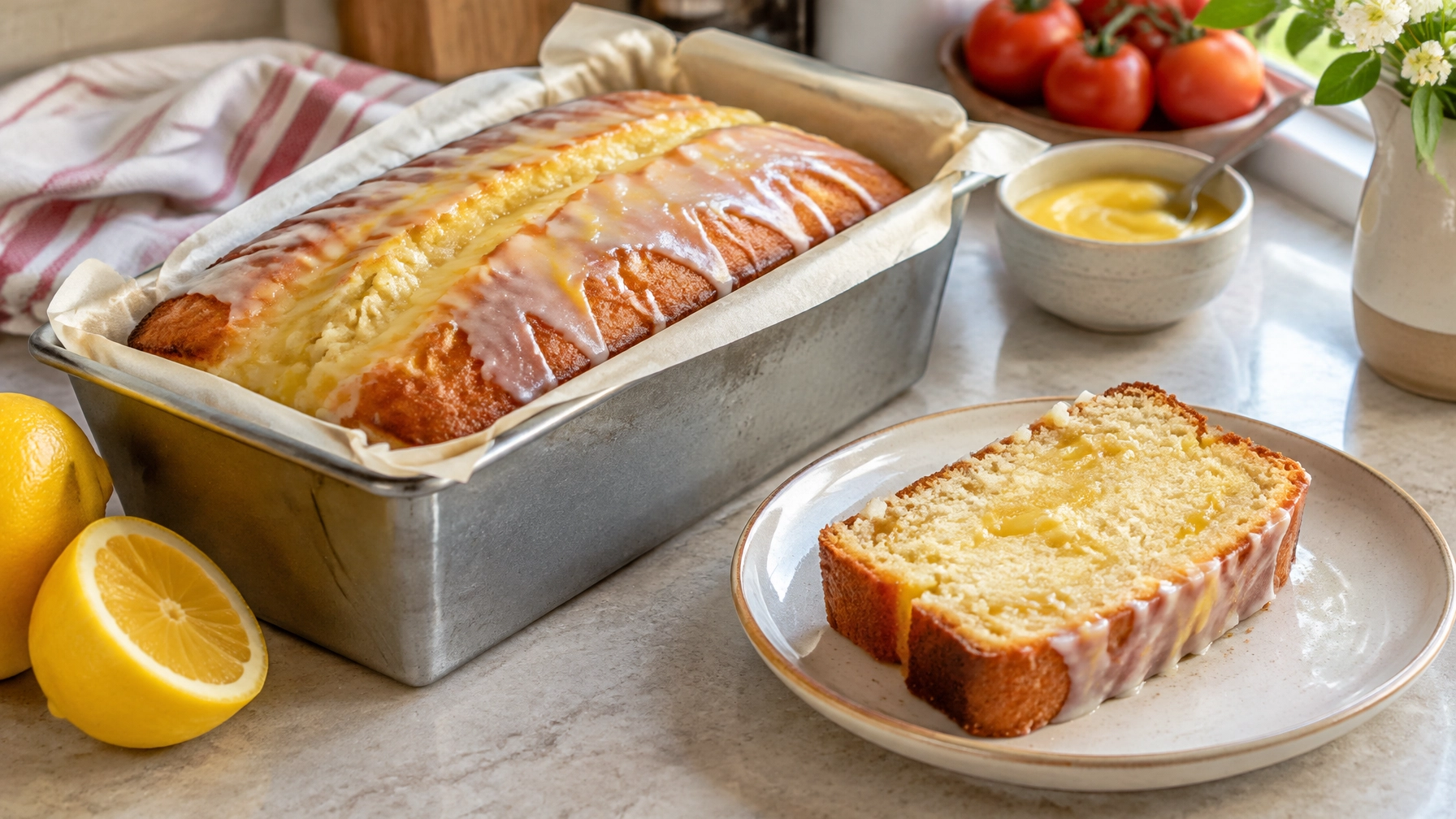
- Leave the cake in the tin for 15 minutes. Lift it out using the paper overhang and transfer it to a wire rack. Let it cool completely before glazing so the glaze stays on the surface.
- Put the icing sugar in a small bowl and stir in the lemon juice gradually, until the glaze is thick but pourable. Add a few extra drops of juice if needed.
- Spoon the glaze over the cooled loaf and leave it to set before slicing. Use a sharp knife and wipe it between cuts for neat slices through the curd ribbons.
Lemon Curd Loaf Cake
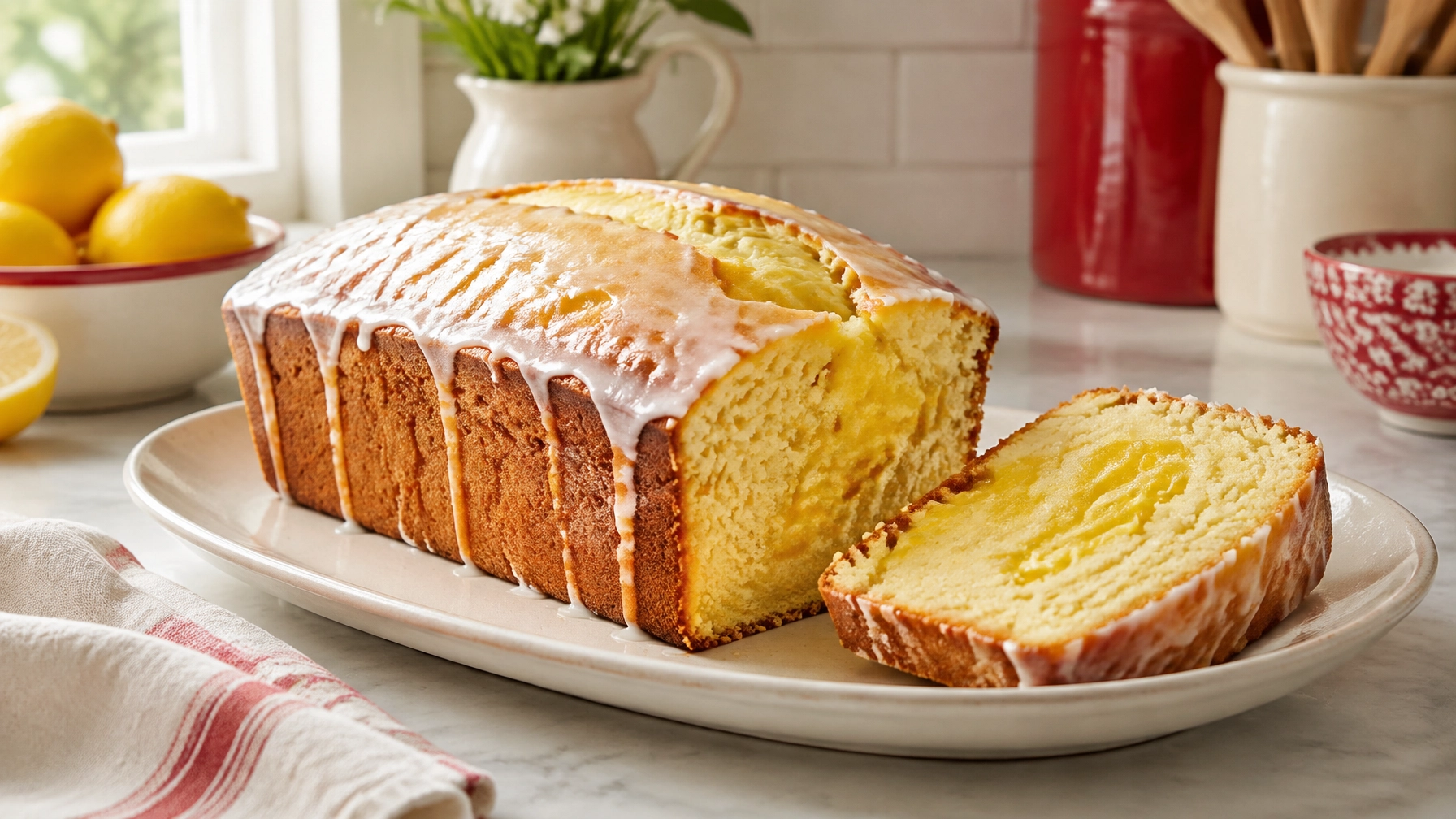
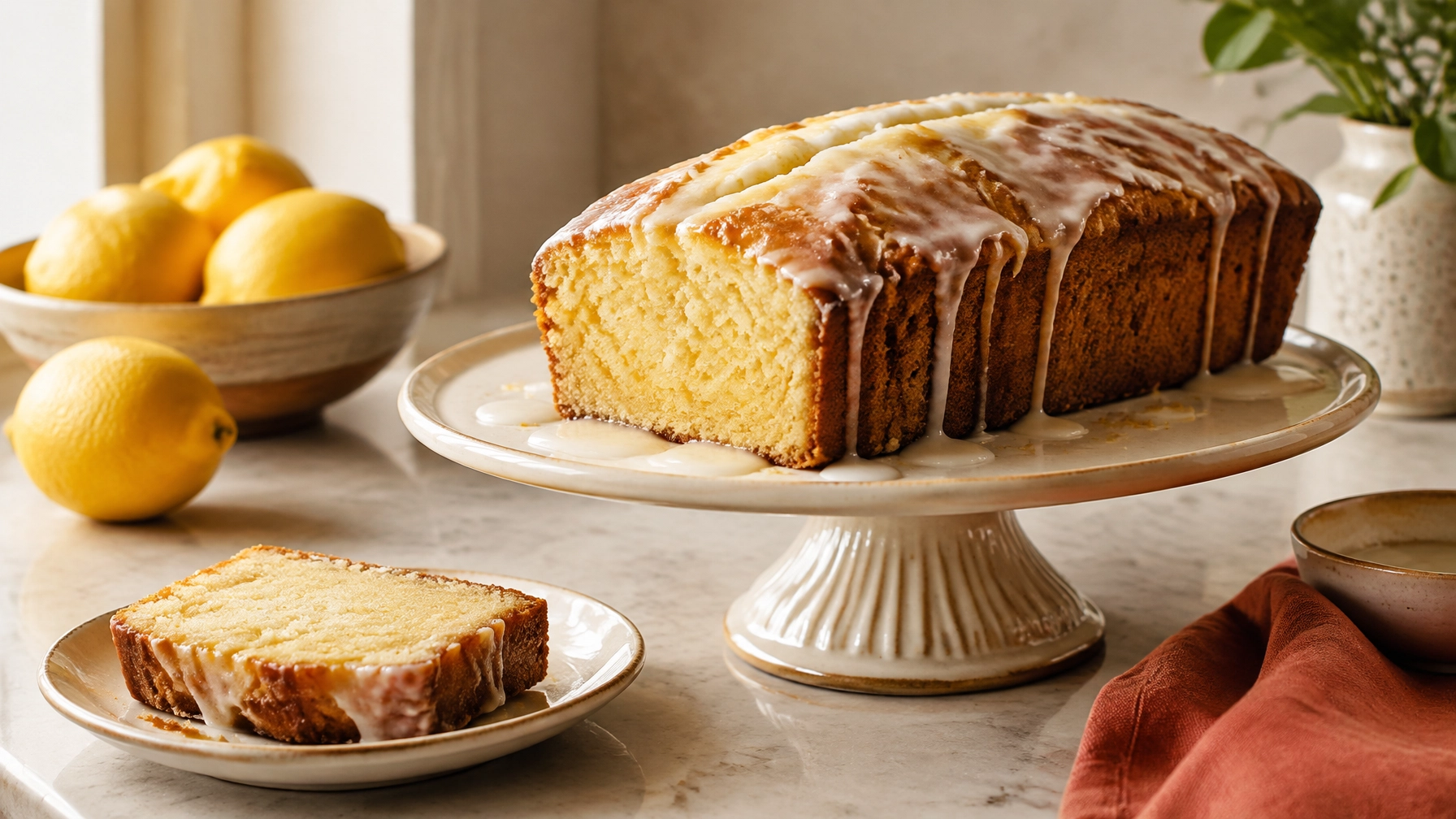
This lemon curd loaf cake has a soft, buttery crumb with ribbons of tangy lemon curd running through it. A light lemon glaze finishes the cake without hiding the curd swirls.
Bake it in a 2 lb loaf tin and let it cool fully before glazing. The method layers lemon curd through the batter, rather than pouring syrup over the cake, so each slice has its own bright pockets of lemon.
Recipe
Servings: Serves 10
Prep time: 20 minutes
Cook time: 70 minutes
Total time: 1 hour 30 minutes
The total time covers preparation and baking. Allow additional time for the cake to cool completely before adding the glaze.
Tips
- Use room-temperature eggs. They incorporate more evenly into the butter and sugar mixture.
- Measure the curd rather than adding extra. Too much can weigh down the centre of the loaf.
- Swirl the curd lightly. A few passes with a skewer preserve clear ribbons in the finished crumb.
- Test the cake away from a visible curd pocket, as warm lemon curd can leave the skewer sticky even when the cake is baked.
Variations
- More lemon zest: Add the finely grated zest of one extra lemon to the batter for a stronger citrus aroma.
- Poppy seeds: Stir 1 tablespoon of poppy seeds into the flour before adding it to the wet ingredients.
- Lemon and blueberry: Fold 100 g of fresh blueberries into the finished batter, then layer in the lemon curd as directed.
- A thinner glaze: Add lemon juice a few drops at a time until the icing sugar mixture is easy to drizzle. Apply it sparingly so the loaf’s surface remains visible.
FAQ
Can I use homemade lemon curd?
Yes. Use a thick, fully cooled curd and measure out 150 g. If it is runny, chill it until it holds its shape on a spoon.
How can I tell when the loaf is baked?
The top should be golden and springy, and a skewer inserted into the cake crumb should come out clean or with a few crumbs. Avoid testing directly through a pocket of curd.
How should I store the cake?
Once the glaze has set, store the loaf in an airtight container at room temperature for up to 3 days. For longer storage, freeze unglazed slices in a sealed container and thaw them before serving.