Recipe
Servings
4 servings 1×
Serves 4Prep 10 minCook 25 minTotal 35 min
Ingredients
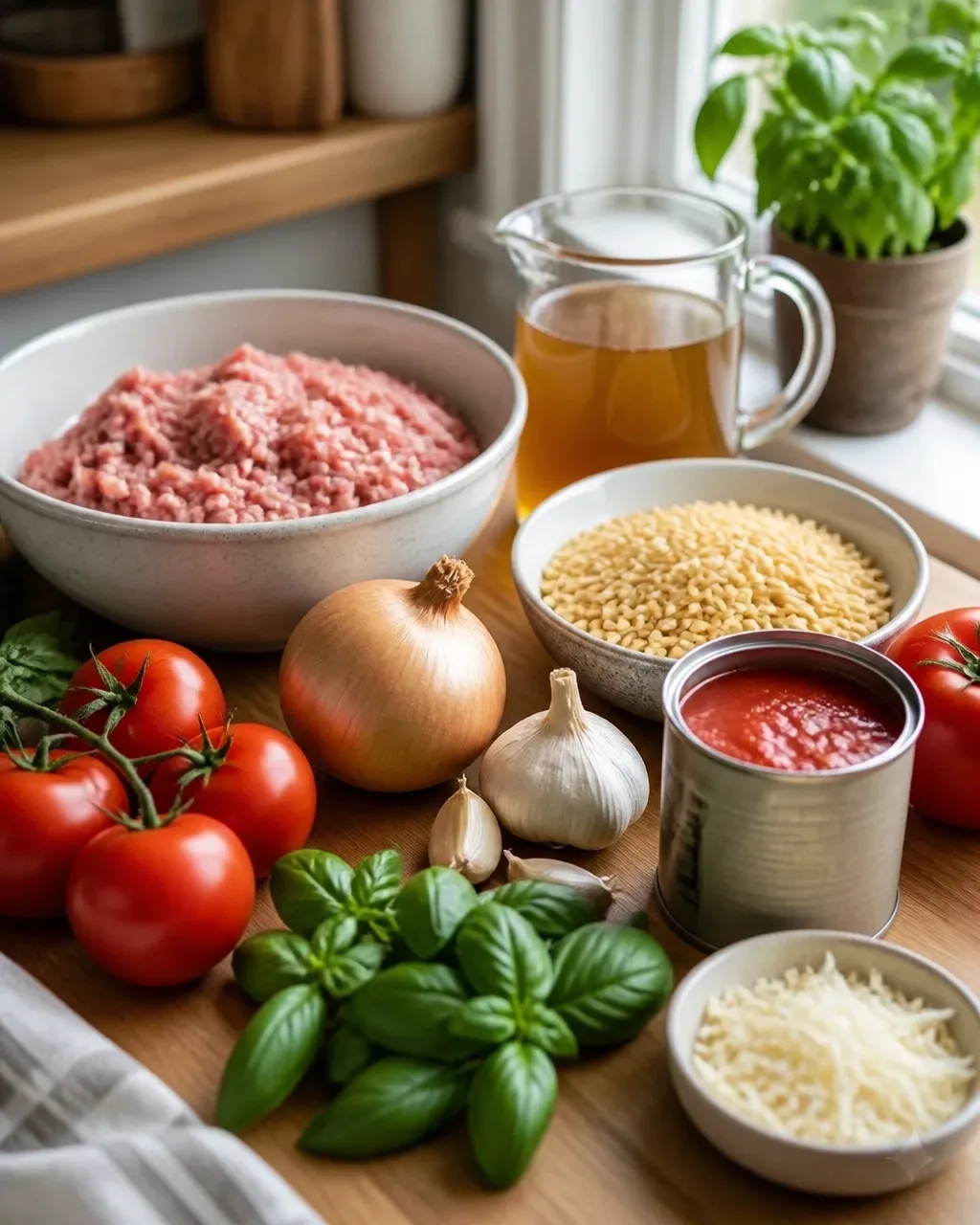
- 1 tablespoon olive oil
- 1 pound ground turkey
- 1 small yellow onion, diced
- 2 garlic cloves, minced
- 2 tablespoons tomato paste
- 1 cup dry orzo
- 1 can (14 ounces) crushed or fire-roasted tomatoes
- 3 cups low-sodium chicken broth
- 1/2 cup heavy cream
- 1/2 cup grated Parmesan
- 1/4 cup chopped fresh basil, plus more to serve
- Salt and black pepper, to taste
Method
- Heat the oil in a wide, heavy-bottomed pot over medium-high heat. Add the turkey and onion, season with salt and pepper, and cook until the turkey is browned and the onion is soft.
- Stir in the garlic and tomato paste and cook for about 1 minute, until fragrant and the paste darkens slightly.
- Add the orzo, tomatoes, and broth. Bring to a gentle simmer, then cook uncovered for 10–12 minutes, stirring occasionally, until the orzo is tender.
- Lower the heat and stir in the cream. Do not let the pot boil. Add the Parmesan gradually and stir until the sauce is smooth.
- Fold in the basil and let the orzo rest for 3 minutes so the sauce can thicken. Taste, adjust the seasoning, and serve with more basil.
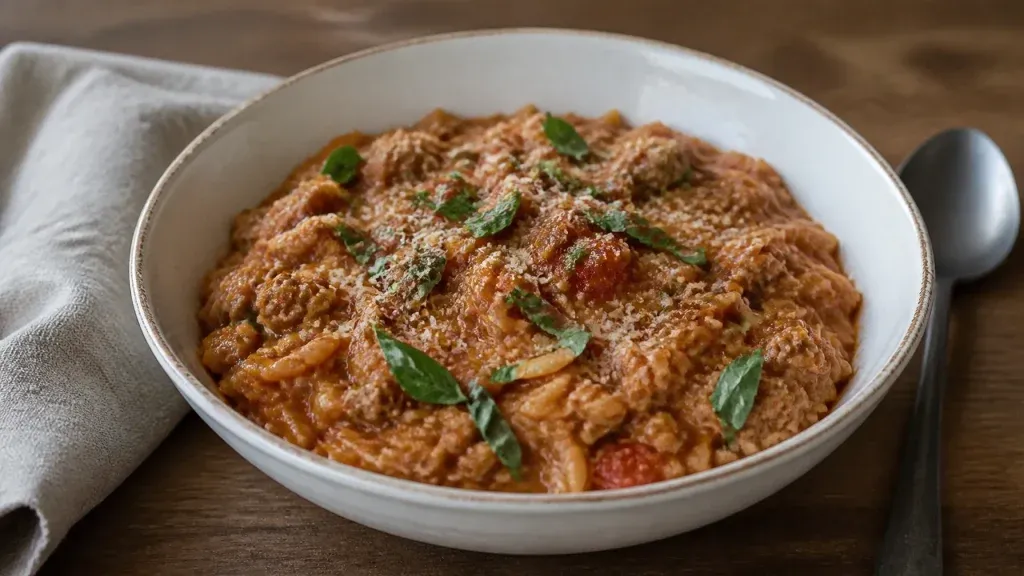
Some dinners ask for three pans, a colander, and the emotional stamina of a cooking-show finalist. This creamy tomato basil turkey orzo asks for one pot and delivers the same cozy reward. It is savory, creamy without becoming heavy, and full of small, tender pasta that soaks up every bit of tomato-rich sauce. Keep this one in your rotation whenever you need a dependable dinner with minimal washing up, and maximum “please make this again” energy.
Tips & Technique: Make the Pot Do the Work
Build flavor before adding liquid
Do not rush straight to the tomatoes. Start by giving the onion and turkey time to develop flavor in the pot. As the turkey cooks, its surface browns through the Maillard reaction, creating savory aromas and deeper flavor than simply simmering raw meat in sauce.
Use a wide, heavy-bottomed pot if you have one. More surface area gives the turkey room to brown instead of steam. Avoid cramming everything into a small saucepan; crowded meat releases moisture faster than it can evaporate, leaving you with pale crumbles and a watery base. Dinner can be quick without being shy.
Season the turkey as it cooks, but keep in mind that Parmesan and broth may add salt later. Taste the liquid before the orzo goes in, then adjust with confidence rather than panic.
Treat tomato paste like a flavor concentrate
Tomato paste is not just red decoration. It contains concentrated tomato solids, natural sugars, and glutamates that bring body and umami to the finished sauce. Let it cook briefly against the hot pot so its raw, metallic edge softens and its flavor becomes rounder.
Add garlic after the turkey and onion have settled down. Garlic contains delicate sulfur compounds that turn bitter when scorched, so use moderate heat and give it only enough time to become fragrant. If it starts turning dark brown, lower the heat immediately. Burnt garlic is remarkably talented at taking over an entire dinner.
For the tomato base, crushed tomatoes work beautifully, while fire-roasted tomatoes add a gentle smoky note. Either choice should be balanced rather than aggressively seasoned. The turkey, Parmesan, basil, and pasta all need room to speak.
Understand why orzo becomes creamy
Orzo looks like rice, but it is pasta, and that distinction matters. When it cooks directly in the tomato and broth mixture, it releases starch into the surrounding liquid. That starch absorbs water and thickens the sauce, creating a texture that feels almost risotto-like without requiring constant stirring or a separate pot of pasta water.
Stir occasionally as the orzo cooks. The pasta settles quickly, especially in a thick tomato sauce, and can stick to the bottom before the top looks ready. Stirring distributes heat and moisture, but do not stir continuously. Too much agitation can make the orzo gummy and break down the texture.
Keep the mixture at a gentle simmer rather than a furious boil. A high boil evaporates liquid too quickly, toughens the outside of the pasta, and may leave the center undercooked. Medium-low heat gives the orzo time to hydrate evenly while allowing the turkey and tomatoes to meld.
Add dairy after the boil
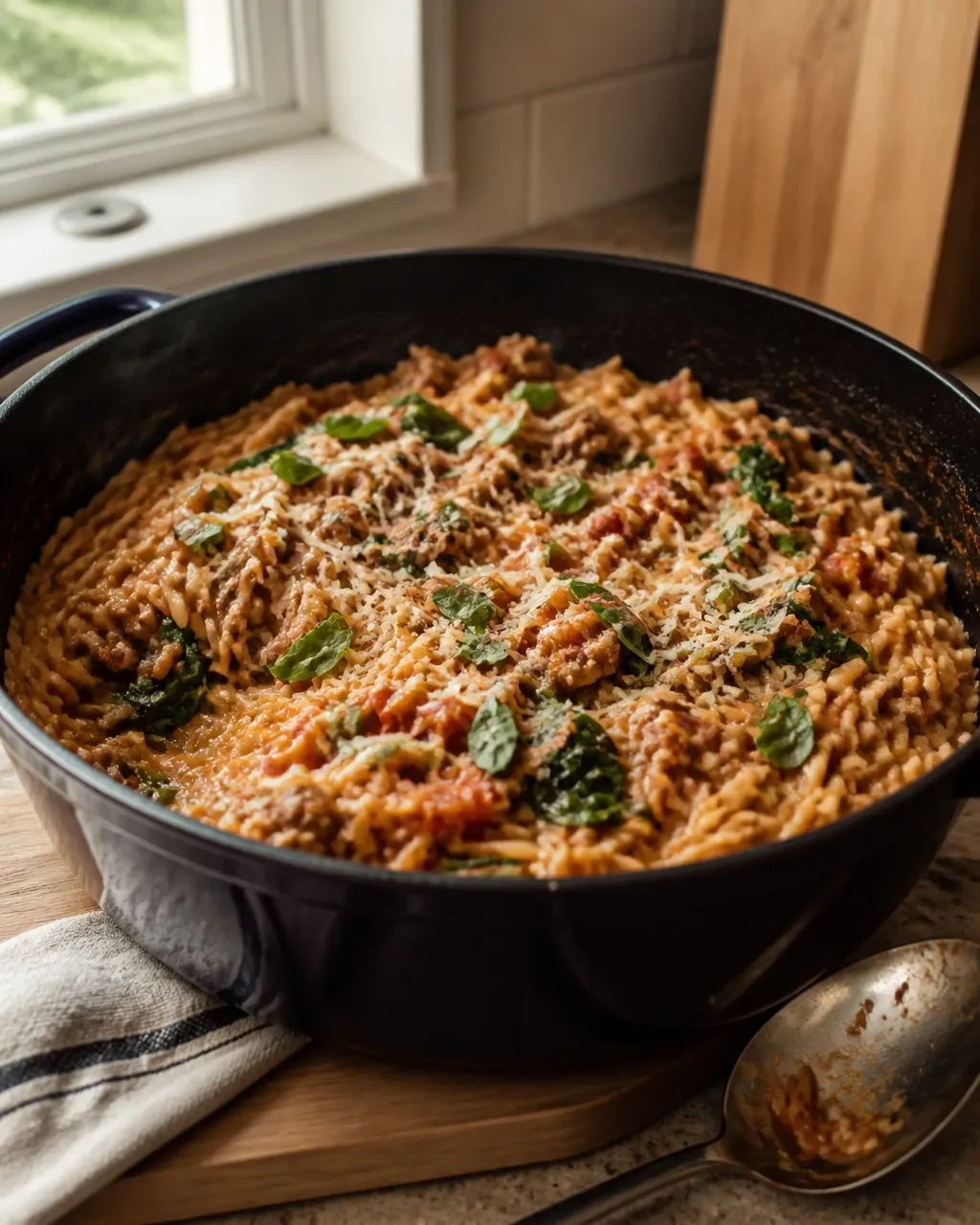
Cream and tomato are delicious friends, but they need boundaries. Tomato acidity can destabilize milk proteins, especially when combined with high heat. Add the cream once the orzo is tender and the pot has stopped bubbling aggressively. Lower the heat, stir gently, and let the sauce come together without boiling.
Heavy cream is more forgiving than milk because its higher fat content helps create a stable emulsion. Half-and-half can work too, but avoid treating it like a kettle of soup. Gentle heat is the non-negotiable here.
Parmesan finishes the job. Its fat, salt, and umami make the sauce taste fuller, while its proteins help bring the water and fat together. Stir it in gradually rather than dumping it all into one spot. The residual heat will melt it smoothly.
Let the orzo rest for a few minutes before serving. This is not dead time; it is the final texture stage. The starch continues to hydrate, the sauce thickens, and the flavors settle. If the pot looks slightly loose at first, wait before adding more cheese. Orzo is a confident little thickener.
Keep basil bright
Fresh basil loses some of its fresh, sweet aroma during long cooking. Fold it through at the end, after the heat has been reduced or switched off, so its volatile oils remain lively. Add a little more just before serving for contrast against the creamy tomato sauce.
For more one-pot inspiration, browse Cookpedia’s one-pot meals collection, or compare the starch technique with our one-pot lemon asparagus spaghetti.
Variations: Change the Mood, Keep the Method
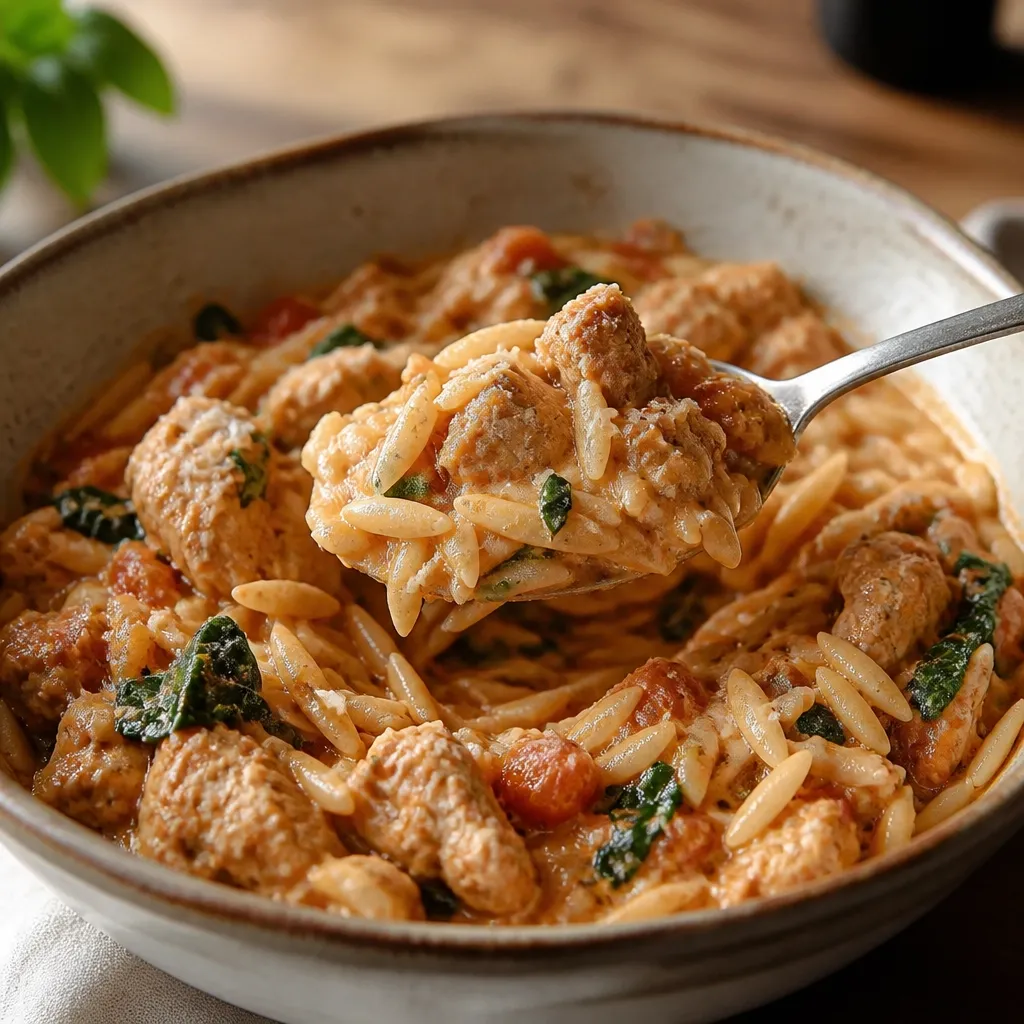
Make this dish your own without dismantling the science. For a lighter version, reduce the cream and let the orzo starch provide more of the body. Add spinach at the end for color and tenderness, or stir in peas during the final stretch so they stay sweet rather than turning dull.
Use ground chicken in place of turkey for a similarly mild result. Italian sausage creates a richer, more assertive pot, so reduce the added salt and consider a splash of lemon juice at the end to sharpen the flavors. For a meat-free variation, replace the turkey with white beans, finely chopped mushrooms, or a plant-based crumble. Mushrooms benefit from being browned well first; otherwise, they release water and soften the sauce too much.
Want extra heat? Add red pepper flakes with the tomato paste so the oil carries their flavor through the sauce. For a smoky version, use fire-roasted tomatoes and a small pinch of smoked paprika. A handful of chopped roasted red peppers adds sweetness and gives the finished orzo a vibrant color.
You can also make it more vegetable-forward with zucchini, chopped kale, or finely diced bell pepper. Keep additions modest, though. Too many watery vegetables can upset the liquid balance and leave the pasta swimming. The pot has a job; do not give it an administrative crisis.
Side Dish Pairings: Add Contrast, Not Competition
This orzo is creamy, savory, and tomato-rich, so choose sides that bring freshness or crisp texture. A simple green salad with lemony dressing is an excellent match. The acidity cuts through the dairy while the raw crunch wakes up each soft, comforting bite.
For a more substantial table, serve roasted broccoli, green beans, or asparagus. Their lightly charred edges echo the browned turkey and tomato paste, while their firmness keeps the meal from becoming one long conversation about softness.
Warm garlic bread is welcome when you want to stretch the sauce further, but keep it modest if you are aiming for lighter, balanced meals. A spoonful of plain Greek yogurt on the side can add tang, though the dish is already creamy enough to stand alone.
Looking for more quick meals? Pair this orzo with a sharp, simple vegetable side and call the weeknight handled.
FAQ: Troubleshooting Your Turkey Orzo
Why is my orzo still firm but the sauce is already thick?
The liquid evaporated faster than the pasta could absorb it. Add a small splash of warm broth or water, stir, and continue cooking gently until the orzo is tender. Avoid adding a large amount at once; you can loosen a thick sauce gradually, but rescuing watery orzo takes longer.
Why did my sauce turn grainy after I added the cream?
The dairy likely encountered too much heat, or the tomato mixture was especially acidic. Remove the pot from the burner and stir gently. A small splash of warm broth can help loosen the emulsion. Next time, add the cream after the bubbling has calmed and avoid boiling once it is in the pot.
Can I use milk instead of heavy cream?
Yes, but expect a thinner and less stable sauce. Use low to moderate heat, add the milk at the end, and avoid boiling. You may need a little extra Parmesan for body, although cheese alone cannot fully replace the fat in cream.
How do I stop the orzo from sticking?
Use a broad pot, maintain a gentle simmer, and stir from the bottom every few minutes. Sticking usually happens because the heat is too high, the pot is too narrow, or the mixture has become thick before the pasta is tender. Do not scrape aggressively if something has scorched; burnt bits can spread bitterness through the entire sauce.
Can I prepare this ahead of time?
You can, but expect the orzo to continue absorbing sauce as it cools. Store it covered in the refrigerator and reheat it gently with a splash of broth. Stir often and stop heating as soon as it is hot. Repeated high-heat reheating can make the pasta soft and the dairy sauce less smooth.
Can I freeze creamy tomato basil turkey orzo?
Freezing is possible, though the texture may change. Pasta tends to soften, and dairy sauces can separate slightly after thawing. Freeze in portions, thaw in the refrigerator, and reheat slowly with broth. Stir in a little fresh Parmesan or basil at the end to refresh the flavor.
How do I know the turkey is safely cooked?
Cook the ground turkey until it is fully cooked throughout, with no raw pink center, and use a food thermometer when possible. Ground poultry should reach 165°F (74°C). Check the thickest portion rather than relying only on color, since tomato sauce can make visual checks less reliable.
Is this suitable for healthy dinner ideas?
It can fit comfortably into a balanced meal, especially when served with vegetables and sensible portions. Turkey provides lean protein, while the orzo supplies carbohydrates for a satisfying dinner. Use less cream, add spinach or another vegetable, and keep an eye on salty ingredients if you want a lighter version.
Can I double the recipe for quick family meals?
Yes, if your pot is wide enough to allow even simmering and you do not fill it too close to the rim. A doubled batch may need extra cooking time, but do not automatically double every minute on the clock. Watch the pasta, stir from the bottom, and add liquid gradually as needed. More dinner is excellent; more stuck-on pasta is not.