Recipe
Serves
8 1×
Serves 8Prep 25 minCook 45 minTotal 1H20 min
Ingredients
Method
- Heat the oven to 180°C (160°C fan). Grease the base and sides of a 23 cm solid-sided round cake tin. Line the base with baking parchment.
- Melt the topping butter and pour it into the prepared tin. Sprinkle the brown sugar evenly over the butter. Arrange the pineapple rings in a single layer and place one cherry in the centre of each ring.
- In a bowl, whisk together the flour, baking powder and salt.
- In a separate bowl, beat the softened butter and caster sugar for 2 to 3 minutes, until pale and creamy. Add the eggs one at a time, beating after each addition. Mix in the vanilla.
- Add the flour mixture in three additions, alternating with the sour cream and milk. Begin and end with the flour mixture. Mix only until combined; the batter will be thick.
- Spoon the batter over the fruit. Spread it gently to the edges without shifting the pineapple.
- Bake for 40 to 45 minutes, until the centre is set and a skewer inserted into the cake comes out clean or with a few dry crumbs. If the top browns too quickly, cover it loosely with foil for the remaining baking time.
- Leave the cake in the tin for 10 minutes. Run a thin knife around the edge, place a serving plate over the tin and invert in one careful motion. Lift off the tin and peel away the parchment.
Pineapple Upside Down Cake (Retro Classic)
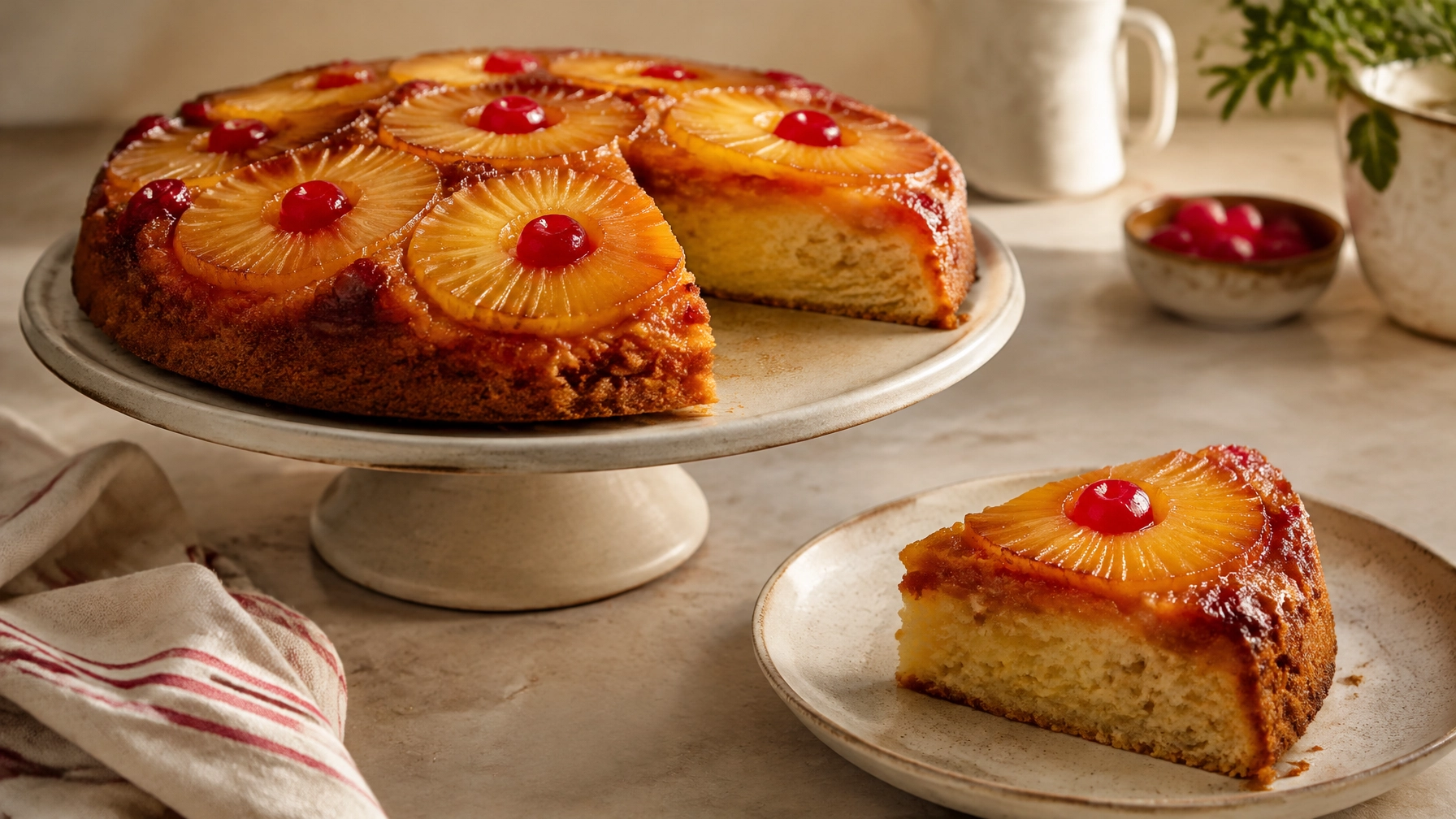
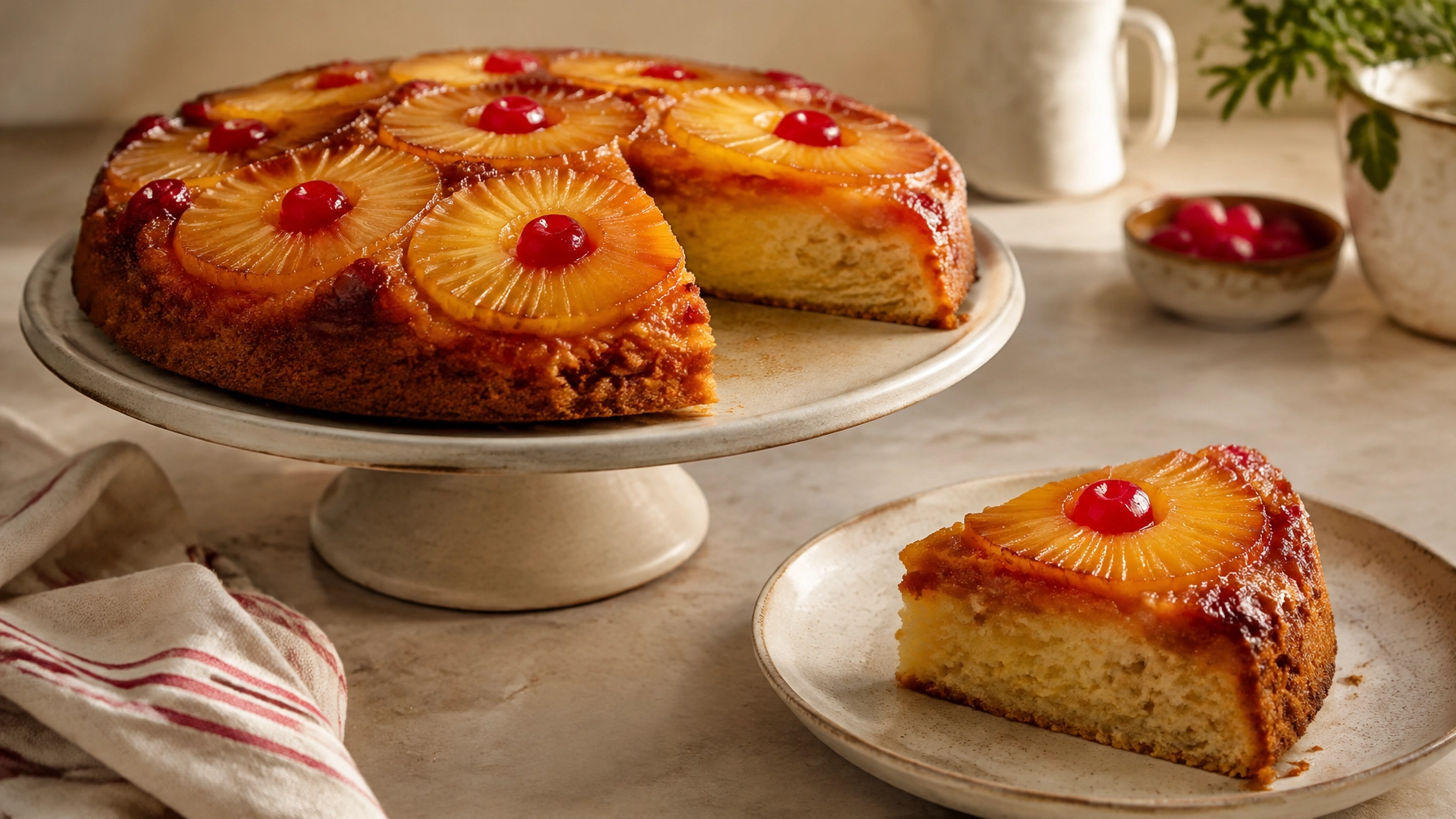
A classic pineapple upside-down cake with a brown sugar topping, pineapple rings and a soft, tender crumb.
Definition
Pineapple upside-down cake (n.): a cake baked with fruit and a butter-and-sugar topping beneath the batter, then turned out after baking so the fruit forms its top.
The familiar pineapple-ring version became popular in the 1920s, when canned pineapple made the fruit easier to use in home baking. Its method is direct: arrange the topping in the pan, add the cake batter, bake, rest briefly and invert. The short cooling period matters. Turn the cake out while the caramel is still soft enough to release.
Recipe
This version uses a 23 cm (9-inch) round cake tin. Use a solid-sided tin rather than a loose-bottom tin, as the topping may leak. The pineapple should be drained and patted dry to limit excess moisture.
Servings: 8
Prep time: 25 minutes
Cook time: 45 minutes
Total time: 1 hour 20 minutes
Tips
- Drain the fruit thoroughly. Excess juice can soften the topping and make the cake difficult to turn out. Patting the rings dry helps the sugar mixture remain concentrated.
- Arrange before adding the batter. The fruit is visible after inversion, so check the pattern while it is still easy to adjust.
- Measure the tin. A smaller tin makes the cake deeper and may require additional baking time. A larger tin produces a shallower cake that may bake sooner.
- Do not leave the cake to cool completely in the tin. The topping can firm as it cools and adhere to the base. Ten minutes allows the cake to settle while the topping remains easier to release.
- Turn it out onto a plate with a rim. The warm topping is syrupy and may run slightly when the cake is inverted.
Variations
- Without cherries: Leave them out and arrange additional pineapple pieces in the open spaces.
- With warm spices: Add ¼ teaspoon ground cinnamon to the flour mixture.
- With nuts: Scatter a small amount of chopped pecans between the pineapple rings before adding the batter. Keep the pieces small so the cake turns out evenly.
- With fresh pineapple: Use thin, evenly cut pieces and remove excess juice. Fresh pineapple can vary in moisture and sweetness, so the topping may differ from the canned-fruit version.
Storage
Cover the cooled cake and keep it refrigerated for up to 3 days. Bring individual slices to room temperature before serving, or warm them briefly. The topping may soften during storage. Do not leave the finished cake at room temperature for an extended period.
FAQ
Can this cake be made ahead?
It can be baked earlier the same day and turned out after the 10-minute rest. For best presentation, allow it to cool before covering. The topping is softest on the day it is baked.
Why did the cake stick to the tin?
The tin may not have been greased or lined adequately, the cake may have cooled too long before inversion, or the topping may have leaked. Use a solid-sided tin, line its base and turn the cake out while it is still warm.
How can I tell when the centre is baked?
Insert a skewer into the cake portion near the centre, avoiding the fruit layer. It should come out clean or with a few dry crumbs. If wet batter clings to it, bake for several more minutes and test again.
Can I freeze the cake?
Freezing is possible, but the fruit topping may release moisture as it thaws. Wrap individual portions once fully cool and freeze for up to 2 months. Thaw in the refrigerator, then bring to room temperature before serving.