Recipe
Servings
Servings 1×
Cook 145 min
Ingredients
- Salmon
- Quinoa
- Noodles
- Potatoes
- Broccoli
- Asparagus
- Cucumber
- Avocado
- Garlic
- Lemon
- Lime
- Mustard
- Feta
- Butter
- Cooking oil
Method
- Let’s talk about the Maillard reaction because it is the reason why seared food tastes better than boiled food.
- Use a heavy skillet, cast iron or stainless steel is best, and let it get hot before the fish ever touches it.
- Use paper towels to pat that salmon dry like you’re trying to save a precious document from a spill.
- Use a high-smoke-point oil (like avocado or grapeseed) and wait until it shimmers.
- Toss them in the same lemon and oil you used for the fish and roast them at high heat until the tips are charred.
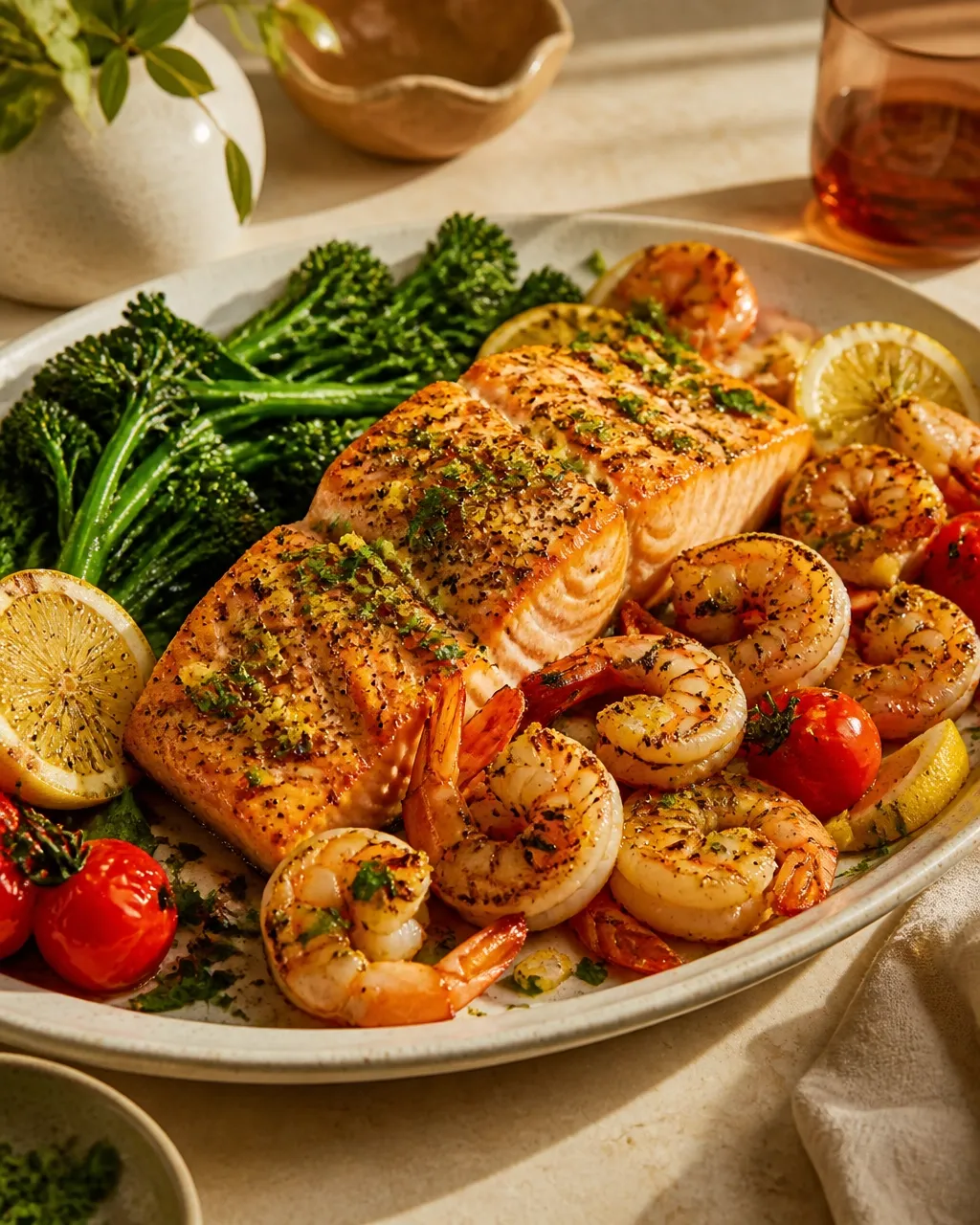
There is a specific kind of magic that happens when a piece of fish hits a hot pan and stays there undisturbed. You know the sound, that aggressive sizzle that promises a crunch. Pan-searing salmon is one of those essential skills that transforms a basic Tuesday night into something that feels like you’ve actually got your life together. It is fast, it is elegant, and honestly, once you understand the physics of the skin, you will never settle for soggy fish again. I am here to help you master the sear so you can add this to your rotation of healthy dinner ideas.
The Physics of the Perfect Crust
Let’s talk about the Maillard reaction because it is the reason why seared food tastes better than boiled food. This chemical reaction occurs between amino acids and reducing sugars when you hit high temperatures (usually above 300°F). It creates that golden-brown crust and complex, savory aroma. If your salmon comes out gray and limp, you’ve failed the Maillard test. To pass, you must respect the pan temperature. Use a heavy skillet, cast iron or stainless steel is best, and let it get hot before the fish ever touches it.
However, the Maillard reaction has a mortal enemy: moisture. If your salmon fillet is even slightly damp, that moisture will instantly turn into steam the moment it hits the heat. Steam tops out at 212°F, which is far too low for browning. Instead of searing, you’ll be steaming your fish in its own juices. Use paper towels to pat that salmon dry like you’re trying to save a precious document from a spill. Press down firmly. The skin should feel tacky, not wet. This is a non-negotiable step for anyone looking to level up their quick family meals.
The second secret is the "cold-contract" rule. When cold protein hits a hot pan, it wants to seize up and stick. Use a high-smoke-point oil (like avocado or grapeseed) and wait until it shimmers. When you lay the fish in, lay it away from you to avoid splashes. Once it’s in, do not touch it. I mean it. If you try to flip it too early and it resists, it is telling you it isn't ready. The skin will naturally release from the pan once the proteins have fully denatured and that crispy crust has formed.
Aim for a 90/10 cooking ratio. Spend about 90% of your cooking time with the skin-side down. This acts as a thermal buffer, protecting the delicate flesh from the direct heat while the fat in the skin renders out and fries itself to a cracker-like consistency. Flip it for the final minute just to kiss the top with heat. Check the internal temperature with a digital thermometer; 145°F is the official safety mark, but many enthusiasts pull it at 130-135°F for a more buttery, medium texture.
Flavor Variations to Keep it Fresh
Once you have the technique down, you can start playing with the flavor profile. While lemon and dill are the classic "gold standard" for a reason, the acidity of the lemon cuts through the fatty richness of the salmon, don't feel boxed in. You can swap the dill for tarragon if you want a subtle licorice note that feels very French, or use cilantro and lime for a brighter, more tropical vibe.
If you’re craving something punchier, try a dry rub before searing. A mix of smoked paprika, garlic powder, and a pinch of brown sugar creates a "blackened" effect that is incredible. The sugar will caramelize quickly, so you have to be careful not to burn it, but the payoff is a deep, smoky crust. For those who love a bit of heat, a thin layer of Dijon mustard brushed onto the flesh (not the skin!) before searing provides a sharp contrast to the mild fish. If you prefer using modern gadgets for your proteins, you might find some inspiration in our air fryer recipes dinner section, which uses similar logic for high-heat roasting.
Perfect Side Dish Pairings
Salmon is a rich, oily fish, so your sides need to provide balance. Think acidity, crunch, or light starches. A simple quinoa salad with cucumber and feta is a great way to keep the meal light. The grain acts as a sponge for any leftover lemon butter sauce, and the cucumber provides a cooling contrast to the warm fish.
If you want something heartier, roasted asparagus or broccolini are natural partners. Toss them in the same lemon and oil you used for the fish and roast them at high heat until the tips are charred. If you are in a rush and need more quick family meals, you could even whip up some garlic butter ramen to serve alongside the salmon; the umami from the noodles pairs surprisingly well with the citrusy fish. For a more comforting, "meat and potatoes" feel, our kielbasa and pierogi roast technique can be adapted for potatoes to serve as a crispy base for your salmon.
Frequently Asked Questions
Why does my salmon have white stuff oozing out of it?
That white stuff is called albumin. It is a protein that exists in the fish in liquid form when raw, but as the muscle fibers contract during cooking, they squeeze the albumin to the surface where it coagulates. It is perfectly safe to eat, but it usually means you are cooking the fish too fast or at too high a temperature. To minimize it, try a lower heat or don't overcook the fish.
Should I cook salmon with the skin on or off?
Always cook with the skin on if you are pan-searing. Even if you don't intend to eat the skin, it provides a vital protective layer between the hot pan and the delicate flesh. It prevents the fish from drying out and helps the fillet hold its shape. If you really hate the skin, you can easily peel it off after the fish is cooked.
Can I use frozen salmon for this?
Yes, but you must thaw it completely first. Use the refrigerator overnight or the cold-water submerged method. Once thawed, you must be extra diligent about drying it off. Frozen fish often releases more moisture than fresh, so double up on those paper towels to ensure you still get a good sear.
How do I stop the fish from sticking?
Check three things: Is the pan hot? Is there enough oil? Did you pat the fish dry? If you did all three and it still sticks, you are likely trying to flip it too early. Use a flexible metal fish spatula to gently peek under the corner. If it doesn't lift easily, give it another 30 seconds.
Is pan-seared salmon part of a healthy diet?
Absolutely. It is one of the best healthy dinner ideas because it is packed with Omega-3 fatty acids and high-quality protein. By searing it ourselves at home, we control the amount of salt and oil, making it a much leaner option than restaurant versions that are often swimming in butter.